
AGOA, Tariffs and Your Contracts: Who Pays When Washington Changes the Rules?
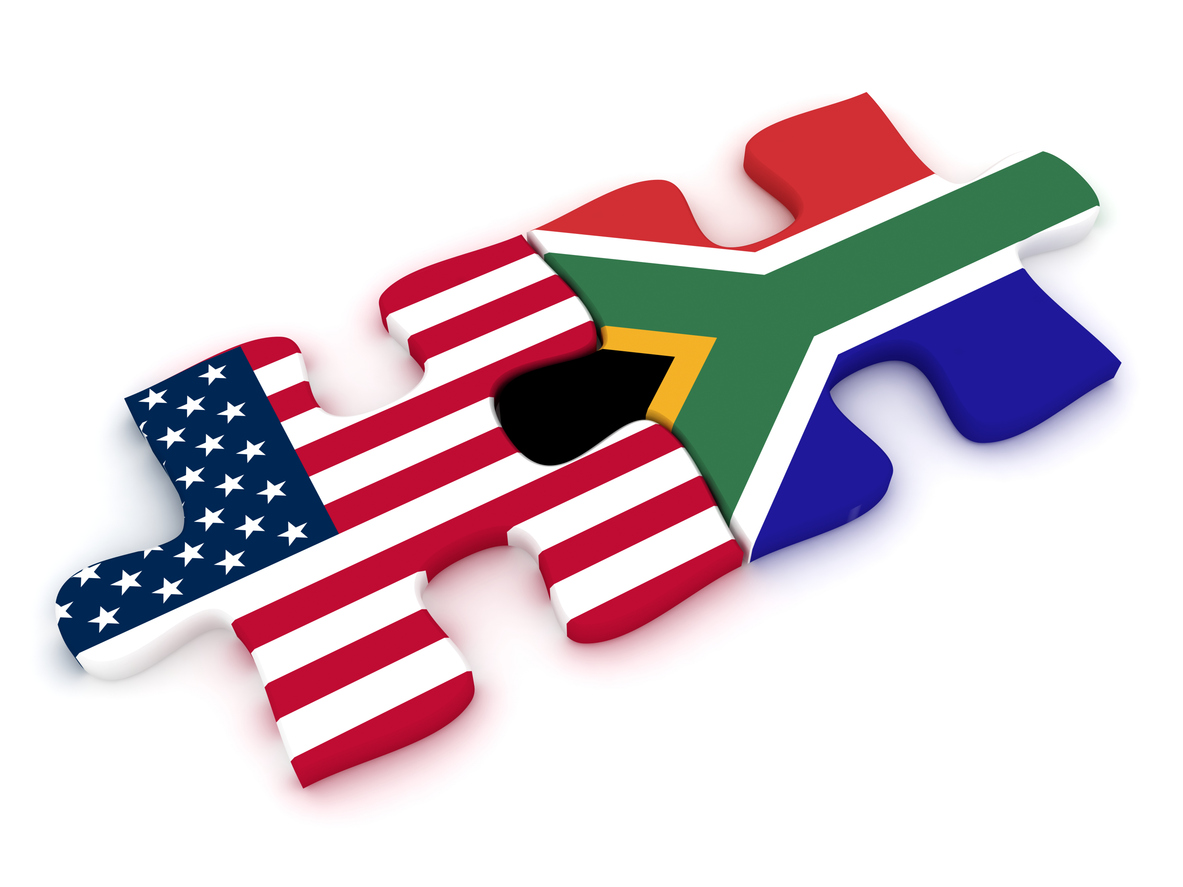
With notice of South Africa’s AGOA removal now given for 1 January 2027 and a 12.5% US tariff already in force, exporters, their local suppliers, and their customers need to know whether their contracts allocate the extra cost, allow renegotiation, or let anyone walk away.
Washington has a flair for timing. And drama. On 2 November 2026, just over a 100 days after a 12.5% Section 301 tariff landed on South African exports, the United States gave notice that it intends to end AGOA (the African Growth and Opportunity Act, a US programme giving qualifying African countries preferential access to the US market) benefits from 1 January 2027. Our government has confirmed the 60 days’ notice. Two months earlier, the programme had been extended to the end of 2028. I assume that was a different diary. Perhaps housed in an adjacent dimension.
It’s only a notice of intent, so a reversal is still possible. But I wouldn’t bank on it.
This is overseas news with a very local invoice attached. Every CFO is quietly asking the same question, in the tone usually reserved for load-shedding schedules - when a foreign government changes the rules mid-contract, who carries the cost under South African law? The honest answer provides less relief than you’d hoped. Unfortunately. The contract decides most of the outcome, which is bad news for anyone who hasn’t opened theirs since the day they signed it.
AGOA and US Tariffs: What’s Actually at Stake
AGOA (US Public Law 106-200) gives qualifying countries preferential access for certain goods. Lose it and trade carries on, just without the preference. About 10% of South African exports to the US entered under AGOA in 2025, down from 28% in 2024, the dtic reports. Wandile Sihlobo puts the average hit at about 3.4 percentage points, taking a typical farm export from 12.5% to roughly 15.9%.
That 12.5% is the Section 301 duty under the US Trade Act of 1974, applied since 24 July 2026 because Washington concluded that South Africa doesn’t adequately prohibit forced-labour imports. South Africa pointed to the International Trade Administration Act 71 of 2002 and the Customs and Excise Act 91 of 1964. Washington proceeded anyway. Separate Section 232 duties of 25% already cover certain steel, aluminium, automobiles, and components, and, as AmCham notes, the new duty doesn’t stack on top of them.
Automotive, agriculture, metals, and manufacturing are the most exposed. The knock-on reaches component makers, logistics providers, landlords, lenders, and municipalities, most of whom have never shipped a container to Ohio but will receive the bill regardless.
Why South African Law Has No General Hardship Defence
If you were hoping for a doctrine of “hardship”, I have some (I’m sure) unwelcome news. South Africa doesn’t have one. We have supervening impossibility, but it’s rather narrow.
In Peters, Flamman & Co v Kokstad Municipality 1919 AD 427, Solomon JA held, as Werksmans records, that vis major (an irresistible superior force, such as a natural disaster) and casus fortuitus (an unforeseeable accident or chance event) can excuse non-performance, though not every such event will. And the impossibility must be objective, which makes it a narrower club than most contract managers imagine.
Compare Hersman v Shapiro & Co 1926 TPD 367. After heavy rains, delivering the agreed grade of corn became far more difficult and expensive than initially anticipated. The court wasn’t moved - the corn was scarce, but it could still be provided. The Supreme Court of Appeal took the same approach in Transnet Ltd t/a National Ports Authority v Owner of MV Snow Crystal 2008 (4) SA 111 (SCA), where, as Werksmans notes, the nature of the contract, the relation of the parties, and the impossibility invoked all had to be weighed.
Now apply that to a tariff. A duty that turns your margin from thin to theoretical and makes performance dearer but leaves it entirely possible, and courts will politely observe that you either priced the risk or you didn’t. It’s apparently as “simple” as that.
Force Majeure, Change-in-Law, and Price-Escalation Clauses: Where Tariffs Slip Through
A force majeure clause is a bit like a smoke alarm programmed to recognise only approved fires. Volcanoes, certainly. Floods, absolutely. War, with real enthusiasm. A tariff then arrives in the kitchen and smoulders quietly through the quarter while the alarm studies the ceiling, politely, as though nothing has occurred. Cliffe Dekker Hofmeyr takes a more sober view - the event must be a legal or physical restraint and not merely an economic one.
Change-in-law clauses often speak only to South African law, which a US tariff isn’t. Tax-and-duty clauses may reach only local imposts, and price-escalation clauses track named inputs. Tariffs weren’t on the list. A material adverse change clause might help - if it was drafted to catch such trade measures.
Incoterms DDP vs FOB: Who Pays the US Tariff?
Before anyone opens the main agreement, three letters may already have settled the matter. They’re the Incoterm (a standard international trade term that sets who pays for shipping, insurance, and import duties between buyer and seller). Under DDP (Delivered Duty Paid), the seller pays the import duties and taxes. Under FOB (Free On Board), the buyer clears imports and pays them.
So, the DDP exporter who priced for duty-free entry now funds the difference from a margin that was never built for it. The FOB, CIF or DAP exporter is safer, at least until the US buyer pushes the cost back through the next price negotiation. Costs behave like office gossip - nobody admits to starting them, and everyone ends up carrying some. But what counts is when goods clear US customs, not when they leave Cape Town. A container that sails in December but clears customs after 1 January loses the preference, so December sailings go first.
Renegotiating After Beadica: Good Faith Won’t Rescue a Bad Bargain
The reflex is to phone the other side and ask for “a conversation”.
But I’d manage expectations.
In Beadica 231 CC and Others v Trustees for the time being of the Oregon Trust and Others [2020] ZACC 13, the Constitutional Court majority held that constitutional values aren’t a free-standing basis for refusing to enforce a contract. Courts step in only where enforcement would be so unfair, unreasonable, or unjust that it offends public policy, a bar set well above “unpleasant”. The lessees missed a renewal deadline and lost their leases. A squeezed margin will struggle to do better.
Good faith can get you a seat at the table. But if your contract has a hardship or price-review clause, you should use it. Promptly and in writing. If it doesn’t, you’re gonna need to ask a favour.
Cancelling a Contract: What Survives Termination
Some of you will want out. Cancellation needs a legal entitlement - irritation doesn’t count - and NVDB Attorneys’ October article covers what follows.
In Twenty-Third Century Systems (Pty) Ltd and Another v SAP Africa Region (Pty) Ltd [2025] ZASCA 51, the Supreme Court of Appeal held, as the court’s media summary records, that a damages exclusion and a one-year time bar survived termination because the survival clause covered “any termination”. Key word being “any”. Cancel in anger and the liability cap stays alive while the time bar quietly runs. Why? Because the indemnity you forgot hasn’t forgotten you.
Financial Distress, Business Rescue, and Directors’ Duties
Under section 128(1) of the Companies Act 71 of 2008, a company is financially distressed if it appears reasonably unlikely to pay all its debts as they fall due within six months, or likely to become insolvent in that time. And if the board believes that’s where it stands but doesn’t resolve on business rescue under section 129(1), section 129(7) requires written notice to each affected person, with reasons. Entering “we hoped for the best” in that box would be brave. But possibly ill advised.
Section 76 adds standards of conduct for directors which, as NVDB Attorneys’ September article notes, include acting in good faith, for a proper purpose, and with the required care, skill, and diligence. Remember - a tariff watched calmly from the boardroom is not diligence.
Business rescue isn’t a magic wand either. In Oakdene Square Properties (Pty) Ltd and Others v Farm Bothasfontein (Kyalami) (Pty) Ltd and Others 2013 (4) SA 539 (SCA), the court required reasonable grounds, more than a prima facie case but less than a probability, that rescue may work. Creditors should read our August piece on business rescue plans and creditor claims and September’s on pursuing directors.
Retrenchments Under Sections 189 and 189A of the LRA
If export orders dry up, so do payrolls. Section 189 of the Labour Relations Act 66 of 1995 requires meaningful consultation on avoiding dismissals, minimising numbers, timing, selection, and severance. Section 189A adds a tougher regime for employers with more than 50 employees. If an employer has up to 200 staff, it applies once it’s considering dismissing 10 or more employees for operational reasons, and any operational-requirements dismissals in the previous 12 months count towards that number.
If a facilitator is appointed, you can’t give anyone notice of dismissal until 60 days after your section 189(3) notice (the written notice that starts the consultation process), under section 189A(7). Your Ohio customer can cancel an order in an afternoon, but the 60 days won’t shorten for him. Municipalities feel it too - fewer salaries, fewer ratepayers, thinner collections - although the rates accounts will keep arriving on schedule. That’s guaranteed.
Exporting to China and Other Markets: New Markets, New Contract Risks
Everyone now wants to sell elsewhere, and China is the obvious first stop. Its zero-tariff scheme for 20 non-least-developed African countries, South Africa included, runs from 1 May 2026 to 30 April 2028, so I’d price the preference for those 2 years only. To qualify, your goods must meet the rules of origin (the tests for whether a product counts as South African-made) and carry the right certificate.
New markets mean customers you may not know well, a different governing law, and a real chance of being paid late, or never. Your force majeure clause will probably ignore tariffs there too. So, agree in the contract who bears the cost if the origin certificate goes missing or turns out to be wrong, because without it the duty-free benefit may be lost.
Contract Review Checklist for Exporters and Local Suppliers
· Which Incoterm applies, and who’s the importer of record?
· Does the price fix, float, or escalate, and on what trigger?
· Do force majeure, change-in-law, and tax-and-duty clauses reach foreign tariffs?
· Is there a hardship or price-review clause, and what notice does it demand?
· Which clauses survive termination, and which time bars are running?
· Who must you consult before retrenching, and do the section 189A numbers apply?
From one practitioner to another - the cheapest time to read a contract is before the tariff arrives. The second cheapest is now. If you’d like a second pair of eyes on your export, supply, or financing agreements, contact NVDB Attorneys in Johannesburg or Cape Town.
If a customer has already stopped paying, our September piece on what you can do about an empty company and its well-dressed directors is the sensible next read. Start reading before your creditors start writing. And may the force (majeure) be with you!
(Sources Used and Those to Whom We Owe Thanks - Companies Act 71 of 2008; Companies Act, Chapter 6; Companies Act, section 129; Labour Relations Act, section 189; Labour Relations Act, section 189A; International Trade Administration Act 71 of 2002; Customs and Excise Act 91 of 1964; Transnet v MV Snow Crystal judgment; Beadica judgment; Oakdene judgment; Twenty-Third Century media summary; Werksmans Attorneys; Cliffe Dekker Hofmeyr; dtic, AGOA statement; dtic, China zero-tariff statement; TradeCaravan; Africa Capital Watch; AmCham South Africa; Engineering News and overseas)